

The Garmin Forerunner 255 and Forerunner 265 are two closely related GPS running watches that often leave runners wondering which one actually makes more sense. Both offer advanced training metrics, accurate GPS tracking, and detailed health insights, making them strong tools for structured running and race preparation.
The key difference is not performance, but experience. The Forerunner 255 focuses on efficiency, long battery life, and outdoor readability, while the Forerunner 265 adds a brighter AMOLED display and touchscreen navigation for a more modern feel.
This comparison highlights what truly separates the Garmin Forerunner 255 vs 265, helping you decide which watch best fits your training style, preferences, and budget.
Garmin Forerunner 255 vs 265: Specs and Features Comparison Table
This side-by-side table highlights the key specifications and features of the Garmin Forerunner 255 and Forerunner 265, making it easy to compare what really matters for training and daily use.
Specs & Features
Watch Type
Display Size
Display Resolution
Input type
Weight
Best Use
Connectivity
Phone Connection
Accessory Connection
NFC
Garmin Pay (Contactless)
Smartphone Compatibility
Navigation
Sensors
Notifications
Water Resistance
Charging Time
(for a full charge)
Battery Life
Supported Workouts
On-screen Workout Animations & Muscle Maps
Steps Tracking
Sleep Tracking
Sleep Score & Insights
Floors Climbed
(barometric altimeter)
Alarm Clock
Calories Tracking
(activity-based estimates)
Distance Tracking
Speed / Pace
Stress Tracking
(all-day HRV-based)
Running Power (Wrist-based)
Swim Tracking
Underwater Heart Rate
Interval Training Support
Training Programs / Plans
Race Predictor
Race Widget & Calendar
HRV Status
Safety Tracking
Find My Phone / Watch
Music Control & Streaming
Internal Storage
Companion App
Daily Health Snapshot
Respiration Rate (24x7)
Relaxation Reminders
Bike Lap & Lap Max Power (with power meter)
Pros
Cons
Price
Garmin Forerunner 255
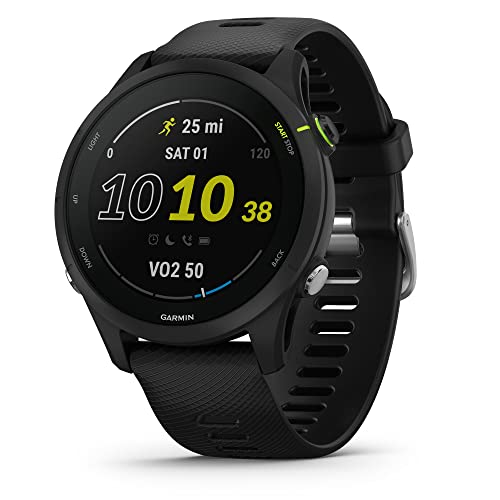
Running / Triathlon / Sport Smartwatch
1.3\" (33 mm) diameter for the 46 mm model
or 1.1\" (27.9 mm) for the 41 mm (255S)
260 × 260 pixels (46 mm)
or 218 × 218 pixels (41 mm – 255S)
5 buttons (no touch)
49 g (1.73 oz) for the 46 mm model
Running, triathlon, multisport training
Connectivity and Sensors
Bluetooth, ANT+, Wi-Fi (Music version)
iOS & Android via Garmin Connect
ANT+ / Bluetooth accessories (sensors, power meters)
Yes (Garmin Pay capable)
Supported (region dependent)
iPhone and Android
Multi-band GNSS with SatIQ auto-select. Provides accurate and reliable route tracking in most outdoor environments, including roads, parks, and light tree cover.
1. Optical Heart Rate monitor (Elevate v4)
2. Accelerometer
3. Barometric altimeter
4. Compass
5. Pulse Ox (SpO₂)
6. GPS / GLONASS / Galileo GNSS
7. Gyroscope
8. Thermometer support (tempe™ sensor required)
Smartphone notifications, text and app alerts, Android quick replies (button navigation only)
Supports ANT+ FE-C smart trainers for automatic resistance control during indoor cycling.
Features
5 ATM (swim-friendly)
~1.5 to 2 hours
* Smartwatch mode: up to 14 days
* GPS mode (without music): up to 30 hours
* GPS + Music (Music model): ~6.5 hours
Supports 30+ activity profiles, including running, cycling, pool swimming, strength, HIIT, yoga, Pilates, cardio, breathwork, and custom structured workouts. Includes daily suggested workouts and Garmin Coach.
No on-screen animated muscle maps (Forerunner 255 focuses on data metrics)
Yes
Tracks sleep stages with nightly analysis.
Yes
Yes
Yes
Yes
Yes
Yes
Yes
Yes
Supported with an external sensor (not native).
✔ Pool and open-water swim.
Limited/depends on conditions and firmware
Yes
Garmin Coach & Connect training plans
Yes
Yes
Yes
✔ Incident detection and assistance
Yes
Music playback and controls. Local storage only on the 255 Music model.
4 GB (Music model) up to ~500 songs
Garmin Connect
Yes
Yes
Yes
Supported
Pros and Cons
► Outstanding battery life, especially for long runs and multi-day training
► Accurate GPS + multi-band performance trusted by many runners
► Lightweight and comfortable, ideal for distance and triathlon use
► Great value, delivering high-end metrics without the price jump
► Strong core training tools, including HRV Status, Training Readiness, and advanced running metrics (with accessories)
► Display is less vibrant than AMOLED, which some users may prefer for everyday readability
► Music storage requires the separate 255 Music model, not included by default
► No native wrist-based running power, requires an external sensor
► User interface feels more button-driven, less smooth than touchscreen models
► AMOLED-like visual clarity missing for maps, widgets, and workout screens
Garmin Forerunner 265

Running / Multisport Smartwatch (AMOLED)
1.3\" (32.5 mm) diameter for the 46 mm model
or 1.1\" (28.1 mm) for the 42 mm (265S) model
416 × 416 pixels (46 mm)
or 360 × 360 pixels (42 mm – 265S)
Touchscreen + 5 buttons
47 g (1.66 oz) for the 46 mm model
Serious runners, daily smartwatch users who want AMOLED & richer UI
Bluetooth, ANT+, Wi-Fi
iOS & Android via Garmin Connect
ANT+ / Bluetooth accessories
Yes (Garmin Pay capable)
Supported (region dependent)
iPhone and Android
Multi-band GNSS with SatIQ auto-select. Delivers similarly accurate tracking with consistent performance across varied environments, including urban areas, trails, and mixed terrain.
1. Optical Heart Rate monitor (Elevate v4)
2. Accelerometer
3. Barometric altimeter
4. Compass
5. Pulse Ox (SpO₂)
6. GPS / GLONASS / Galileo GNSS
7. Gyroscope
8. Thermometer support (tempe™ sensor required)
9. Ambient Light Sensor
Smartphone notifications, text and app alerts, Android quick replies, smoother interaction through touchscreen scrolling, and clearer AMOLED display
Supports ANT+ FE-C smart trainers for automatic resistance control during indoor cycling.
5 ATM (swim-friendly)
~1.5 to 2 hours
* Smartwatch mode: up to 13 days
* GPS mode (GPS only): up to 20 hours
* All-Systems GNSS + Multi-Band: up to 14 hours
* GPS + Music: up to ~7 hours (varies by mode)
Supports 30+ activity profiles, matching the 255 with running, cycling, pool swimming, strength, HIIT, yoga, Pilates, cardio, breathwork, and custom structured workouts. Added clarity and smoother guidance through the AMOLED touchscreen.
Richer visual UI (AMOLED) — still primarily data-focused, not full animated muscle maps
Yes
Tracks sleep stages with clearer visuals on the AMOLED display.
Yes
Yes
Yes
Yes
Yes
Yes
Yes
Yes
Native wrist-based running power, no external sensor required.
✔ Pool and open-water swim.
Limited/depends on firmware & conditions
Yes
Garmin Coach, Connect training plans
Yes
Yes
Yes
✔ Incident detection and assistance
Yes
Full music playback and local storage on all models.
8 GB internal storage (approx. capacity for music and activities)
Garmin Connect
Yes
Yes
Yes
Supported
► Bright AMOLED touchscreen that improves readability, navigation, and daily usability
► Native wrist-based running power with no external sensor required
► Music storage included on all models, making it easier to run phone-free
► Smoother interface and more intuitive experience through touchscreen + AMOLED
► Same advanced training metrics, but displayed more clearly with richer visuals
► Shorter battery life in GNSS modes compared to FR255 due to the AMOLED display
► Higher price, which may not appeal to runners focused strictly on training value
► Touchscreen may be less convenient in sweat or rain, depending on user preference
► Slight weight difference compared to the Forerunner 255, but unlikely to be noticeable during running or daily wear
This page contains affiliate links. If you purchase after clicking on a link, we may earn a commission at no extra cost to you.
Garmin Forerunner 255 vs 265: Key Differences Explained
At first glance, the Garmin Forerunner 255 and Forerunner 265 look very similar. Both are lightweight GPS running watches designed for structured training and performance tracking. The real differences become clear when you compare the display, interaction style, and overall day-to-day experience.
🖥️ Display Technology
The most noticeable difference is the screen.
The Garmin Forerunner 265 features a bright AMOLED display that delivers sharper colors and higher contrast, especially indoors and in low-light conditions.
The Forerunner 255 uses a transflective, sunlight-visible display that remains easy to read outdoors without relying on high brightness or backlighting. This design allows the screen to stay visible throughout the day, makes quick mid-run glances easier under bright sunlight, and helps preserve battery life.
While both displays are effective for running, the difference comes down to preference: visual clarity and touch interaction versus maximum outdoor visibility and longer endurance.

👆 Touchscreen vs Buttons
The Forerunner 265 includes a touchscreen in addition to Garmin’s five-button layout. The touchscreen can be disabled during activities, allowing runners to rely entirely on physical buttons if preferred.
The Forerunner 255 does not include a touchscreen and is operated exclusively using buttons, which some runners prefer for consistency during workouts.
Hot Keys & Flashlight
Both watches support customizable button controls, but the Forerunner 265 benefits more from Hot Keys thanks to its built-in AMOLED flashlight feature. Hot Keys allow quick access to functions like the flashlight using button combinations, which is especially useful at night or in low-light situations.
While the Forerunner 255 includes quick-access controls, it does not offer the same flashlight experience, making these shortcuts less impactful in everyday use.
ℹ️ Real-World Usability Experience
From my own experience, the combination of touchscreen and physical buttons on the Forerunner 265 becomes intuitive after a short adjustment period.
Swiping through widgets and tapping menus can make everyday navigation feel quicker, while the buttons remain reliable during workouts.
After getting used to this hybrid interaction, switching back to a button-only watch may require a brief adjustment, particularly when navigating menus outside of activities.
🔋 Battery Life Approach
Battery performance reflects the display choice.
The Forerunner 255 delivers longer battery life in both smartwatch mode and GPS usage thanks to its low-power display.
The Forerunner 265 still offers solid battery performance, but the AMOLED display draws more power, especially when always-on mode is enabled.
In real-world use, GPS accuracy, pace tracking, and distance measurements are comparable between the Forerunner 255 and Forerunner 265, as both rely on similar multi-band GPS technology.
🎧 Music Storage and Offline Streaming
The Forerunner 265 includes 8 GB of internal storage and supports offline music playback from services such as Spotify and YouTube Music (with a Premium subscription). This allows runners to download playlists or podcasts directly to the watch and run without carrying a phone.
The Forerunner 255 offers 4 GB of storage, but only on the Music edition, and also supports compatible offline streaming services.
From my experience using the 265, phone-free runs with downloaded playlists are convenient and reliable, especially for shorter or structured workouts. If you regularly run without your phone, storage capacity and music support may be a meaningful factor. If you do not use on-watch music, this difference will likely have little impact.
🎽 Everyday Running Experience
The Forerunner 255 feels like a focused training tool built for runners who value simplicity, reliability, and long battery life.
The Forerunner 265 feels more like a premium running smartwatch, combining advanced training metrics with a visually engaging daily experience.
ℹ️ Software features such as Training Readiness and advanced performance insights continue to roll out via updates, and most core training and health metrics are shared between both models.

Which Watch Is Better for Your Running Goals?
Choosing between the Garmin Forerunner 255 and Forerunner 265 depends less on training features and more on how you prefer to train and interact with your watch. Both offer advanced metrics, accurate GPS, and strong health tracking, but they serve slightly different types of runners.
🏃 Who Should Choose the Garmin Forerunner 255
The Forerunner 255 is a strong choice for runners who prioritize performance, reliability, and battery life over visual flair. It is especially well-suited for outdoor-focused athletes who train in varying weather conditions and rely heavily on physical buttons during workouts.
This watch makes sense if you value long battery life, excellent visibility in direct sunlight, and a straightforward training-focused experience. It is also a smart option for runners who want advanced metrics and race tools without paying extra for a premium display.
🏃♂️ Who Should Choose the Garmin Forerunner 265
The Forerunner 265 is better suited for runners who want the same advanced training tools combined with a more modern and interactive experience. The AMOLED display and touchscreen make everyday use more engaging, especially for reviewing stats, navigating menus, and wearing the watch all day.
This model is ideal if you enjoy a brighter screen, smoother navigation, and a more smartwatch-like feel while still benefiting from Garmin’s training insights and race features.
ℹ️ Runners following a structured plan for longer distances, such as half marathon preparation, may benefit from watches like these that support training readiness, race widgets, and daily suggested workouts. You can see how these features fit into real-world preparation in our half marathon training plan tips.
🎯 A Simple Way to Decide
If your training is primarily about efficiency, long runs, and minimizing distractions, the Forerunner 255 is likely the better fit.
If you want a more premium look and a richer on-screen experience without sacrificing performance features, the Forerunner 265 is the better choice.
Price and Value Comparison
When comparing the Garmin Forerunner 255 and Forerunner 265, price is one of the clearest points of separation. Both watches offer advanced training metrics, reliable GPS accuracy, and strong health tracking, but they differ in how much you pay for the experience around those features.
💰 Garmin Forerunner 255: Strong Value for Performance
The Forerunner 255 is generally the more affordable option. It delivers nearly all of Garmin’s core running and training features, including multi-band GPS, training readiness, race tools, and detailed health metrics.
For runners who prioritize training quality, battery life, and outdoor usability, the Forerunner 255 offers excellent value. You are paying for performance and reliability rather than visual upgrades.
💎 Garmin Forerunner 265: Paying for a Premium Experience
The Forerunner 265 typically costs more, and the higher price is largely tied to its AMOLED display and touchscreen interface. These additions do not fundamentally change training capabilities, but they do improve day-to-day interaction, visual clarity, and overall usability.
For runners who wear their watch all day and value a more modern experience, the added cost can feel justified.
Best for Budget vs Premium
💰 Best for Budget-Focused Runners – Garmin Forerunner 255
Ideal for runners who want advanced training metrics, excellent GPS accuracy, and long battery life without paying extra for display upgrades.
💎 Best for a Premium Experience – Garmin Forerunner 265
Best suited for runners who want the same powerful training tools with a brighter AMOLED display and touchscreen navigation.
⚖️ Final Verdict: Garmin Forerunner 255 vs 265
The Garmin Forerunner 255 and Forerunner 265 are both excellent GPS running watches built around the same core training and health features. Your decision does not come down to performance metrics, since both deliver accurate GPS tracking, advanced training insights, and reliable daily health monitoring.
The real difference lies in how you experience those features.
The Forerunner 255 is the better choice for runners who value practicality. Its always-on MIP display, longer battery life, and button-only controls make it a dependable training tool, especially for outdoor running and longer sessions.
The Forerunner 265 is ideal for runners who want a more modern and engaging experience. The AMOLED display and touchscreen elevate everyday usability and visual clarity while still delivering the same training depth.
In simple terms, choose the Forerunner 255 if efficiency, battery life, and value are your top priorities. Choose the Forerunner 265 if you want a premium look and smoother daily interaction without sacrificing training capabilities.
Both watches are strong choices. The right one is the watch that best fits how you train, how you interact with your device, and what you value most in your running routine.
➤ Garmin Forerunner 255 vs 265: Frequently Asked Questions
The following questions address common concerns runners have when choosing between the Garmin Forerunner 255 and Forerunner 265.
Upgrading to the Forerunner 265 is mainly about the user experience rather than new training features. Both watches offer very similar metrics, GPS accuracy, and health tracking. The 265 may be worth the upgrade if you prefer an AMOLED display, touchscreen navigation, and a more modern daily interface. If battery life and button-only control are higher priorities, the Forerunner 255 remains a strong choice.
The AMOLED display uses more power than the transflective display on the Forerunner 255, especially when always-on mode is enabled. Battery life is still sufficient for most training sessions, but the difference becomes more noticeable during very long runs or multi-day activities.
Yes. In real-world use, GPS accuracy is comparable between the two watches. Both rely on multi-band GNSS with Garmin’s SatIQ technology for reliable pace, distance, and route tracking.
The Forerunner 255 is generally better suited due to its longer battery life and always-visible display in direct sunlight. The Forerunner 265 can still handle long-distance training, but endurance-focused runners may prefer the 255.
The touchscreen is useful for navigation and daily use, and it can be disabled during workouts to rely fully on physical buttons. This helps prevent accidental inputs caused by sweat or rain.
Discover more from Need For Run
Subscribe to get the latest posts sent to your email.