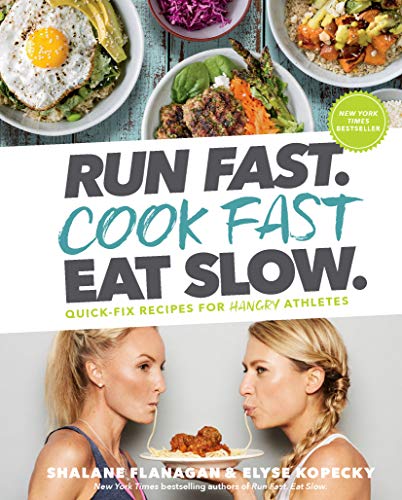
Run Fast. Cook Fast. Eat Slow.: A Practical Cookbook for Busy Runners

Finding time to prepare satisfying meals can be difficult when running, work, and family responsibilities compete for the same hours. Run Fast. Cook Fast. Eat Slow. was created to make home cooking more manageable for runners and other active people with demanding schedules.
This follow-up to Run Fast. Eat Slow. combines Olympian Shalane Flanagan’s experience as an elite runner with chef and nutrition coach Elyse Kopecky’s practical approach to cooking. The recipes emphasize minimally processed ingredients, enjoyable meals, and listening to hunger cues instead of counting calories or following rigid eating rules.
What You Will Find Inside
The cookbook covers different parts of a runner’s day rather than concentrating only on dinner. Its range includes:
- Pre-run snacks and smoothies
- Post-run breakfasts
- Portable lunches and grain salads
- Vegetable-packed power bowls
- Soups, pasta, pizza, and slow-cooker meals
- Side dishes, sauces, and dressings
- Superhero muffins and other portable snacks
- Race-day bars, drinks, and satisfying treats
- Dinner recipes designed to take 30 minutes or less
Recipes featured in the book include Apple-Carrot Superhero Muffins, Thai Quinoa Salad, Superfoods Soup, Slow Cooker Pulled Chicken, roasted vegetables, smoothie bowls, and chocolate peanut butter cups.
📌 This variety makes the cookbook useful beyond a single training phase. Readers can choose a quick snack before a run, prepare something portable for later, or put together a complete meal for the household.
💡For a broader overview of food choices and timing around training, see our guide to the 10 best foods for runners

Quick Recipes Without Making Every Meal Feel the Same
The main difference between this cookbook and the original Run Fast. Eat Slow. is its stronger emphasis on convenience. It includes simplified ideas, new recipes, and time-saving approaches intended for days when long preparation is not realistic.
The book does not limit quick cooking to smoothies and salads. It also covers hearty bowls, pasta, meat and fish dishes, homemade pizza, soups, sauces, baked snacks, and desserts. This helps provide more variety than a narrowly focused sports-nutrition cookbook.
ℹ️ It is important to understand that “Cook Fast” does not mean every recipe takes less than 30 minutes from beginning to end. The publisher’s 30-minute promise applies specifically to the dinner recipes. Certain baked dishes, slow-cooker meals, and recipes involving preparation will naturally take longer.
A Whole-Food Approach Rather Than a Diet Plan
The authors favor ingredients that are close to their original form, including vegetables, fruit, whole grains, beans, eggs, cultured dairy, meat, fish, nuts, seeds, and minimally processed fats.
Their approach is not based on weight loss, calorie restriction, or precise macronutrient targets. Instead, the book encourages readers to prepare satisfying food, eat according to their individual hunger, and develop a more practical relationship with everyday cooking.
This makes the cookbook a source of recipes and general ideas rather than a personalized sports-nutrition program. Runners with medical conditions, allergies, or specific performance requirements may still need guidance from a qualified healthcare or nutrition professional.
Dietary Preferences and Ingredient Considerations
The collection includes plant-forward recipes as well as meals containing meat, fish, dairy, gluten, and nuts. Many dishes can be adjusted for different dietary preferences, but this is not an exclusively vegan, vegetarian, gluten-free, dairy-free, or allergy-friendly cookbook.
Some recipes also call for ingredients that may not already be in every kitchen, such as almond meal, tahini, miso, specialty oils, nuts, and seeds. Readers who normally cook with a small set of basic pantry staples may need to purchase several ingredients initially.
That additional shopping is one of the book’s main trade-offs. Once those ingredients are available, however, many can be reused across multiple recipes.
More Than a Collection of Recipes
In addition to the recipes, the book includes practical guidance intended to make cooking and active living easier. Topics include meal preparation, organizing ingredients, saving time in the kitchen, and creating satisfying meals from whole foods.
It also contains general tips related to running, strength work, sleep, and recovery. These additions provide context for the recipes, although the book should be viewed as a cookbook rather than a complete training or sports-nutrition manual.
The full-color photography and approachable presentation also make it suitable for readers who prefer visually guided cookbooks rather than pages filled only with instructions.
What Readers Commonly Like
Recurring reader feedback highlights several strengths:
- Flavorful recipes that do not feel like restrictive “diet food”
- A useful selection of breakfasts, snacks, smoothies, and complete meals
- Clear instructions that are approachable for everyday home cooks
- Attractive food photography and an encouraging writing style
- Meal-preparation ideas that can be reused throughout the week
- Recipes that can serve active individuals as well as families
The most common concern involves ingredient cost and availability. Some readers find ingredients such as almond meal, tahini, miso, or certain oils less familiar or more expensive than standard pantry items. A blender or food processor can also make several recipes easier to prepare.
Who Should Consider This Cookbook?
Run Fast. Cook Fast. Eat Slow. may be a good fit for:
- Runners who struggle to find time for home cooking
- Active people looking for ideas beyond basic sports snacks
- Readers who prefer whole-food recipes over calorie-focused meal plans
- Families that want satisfying meals suitable for active and non-active members
- Owners of the original Run Fast. Eat Slow. who want quicker recipe options
- Home cooks interested in smoothies, bowls, muffins, salads, sauces, and complete dinners
- Anyone looking for a visually appealing cookbook with practical preparation tips
Who May Prefer a Different Cookbook?
Consider another option if you want:
- Recipes based exclusively on inexpensive, basic pantry ingredients
- A fully vegan, gluten-free, dairy-free, or allergy-specific cookbook
- Detailed calorie and macronutrient information for every meal
- A personalized nutrition plan for a particular training goal
- Only five-ingredient recipes or meals requiring almost no preparation
- A cookbook focused primarily on weight loss
About the Authors
Shalane Flanagan is an Olympic silver medalist, four-time Olympian, and winner of the 2017 TCS New York City Marathon. Her experience gives the book a genuine connection to the practical demands of endurance training.
Elyse Kopecky is a chef, nutrition coach, marathoner, and bestselling cookbook author. Her culinary background helps translate the book’s food philosophy into recipes intended for ordinary home kitchens.
Together, Flanagan and Kopecky have created multiple bestselling cookbooks for runners and active households.

Book Details
- Authors: Shalane Flanagan and Elyse Kopecky
- Publisher: Rodale Books
- Publication date: August 14, 2018
- Length: 256 pages
- Language: English
- ISBN-10: 1635651913
- ISBN-13: 978-1635651911
- Formats: Hardcover and ebook, subject to current availability
- Recognition: New York Times bestseller and IACP Award finalist
Questions Readers Often Ask
Is this cookbook only for serious runners?
No. Although it was created with runners and athletes in mind, its recipes are also suitable for recreational exercisers, busy households, and home cooks looking for convenient whole-food meal ideas.
Can every recipe be prepared in 30 minutes?
No. The 30-minutes-or-less description applies specifically to the dinner recipes. Some baked items, slow-cooker meals, and recipes requiring preparation will take longer.
Do I need to own the first Run Fast. Eat Slow. cookbook?
No. This cookbook can be used on its own and briefly explains the authors’ approach to food. Readers who own the first book may appreciate the additional recipes and greater focus on convenience.
Is the cookbook vegetarian or vegan?
No. It contains many vegetable-forward recipes, but it also uses meat, fish, eggs, dairy, nuts, and other ingredients. Some recipes can be modified, but readers following a strict diet should review individual ingredient lists carefully.
Does the book include calorie and macronutrient information?
It is not designed as a calorie-counting or macronutrient-tracking guide. The authors focus instead on whole foods, satisfying meals, and responding to hunger. Anyone who requires precise nutritional targets may need an additional resource.
Is Run Fast. Cook Fast. Eat Slow. Right for You?
This cookbook stands out by combining runner-focused meal ideas with realistic attention to busy schedules. Its broad selection of snacks, breakfasts, portable lunches, sauces, bowls, baked items, and complete dinners makes it more versatile than a cookbook built around only one type of meal.
It is best suited to runners who enjoy cooking and are willing to keep a reasonably varied pantry. Readers seeking only the cheapest ingredients, detailed nutritional calculations, or a strict special-diet plan may find another cookbook more appropriate.