Description
This page contains affiliate links. If you make a purchase after clicking on a link we may earn a commission at no extra cost to you.
Compact 360° Balance Training for Your Core, Ankles, and Lower Body
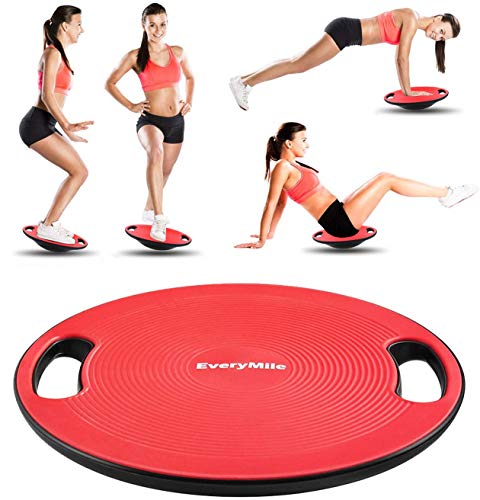
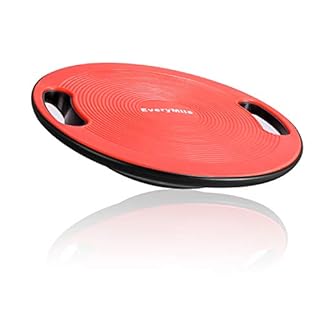
Feeling steady and controlled matters when you run, exercise, or simply move through everyday activities. The EVERYMILE Wobble Balance Board provides an intentionally unstable platform that challenges you to make small, continuous adjustments through your core and lower body.
The compact, rigid board requires no inflation and can add a balance challenge to standing drills, squats, planks, and other exercises. Its 15.7-inch platform is better suited to a relatively narrow stance. Grip may vary depending on your footwear and flooring, so make sure all contact surfaces are clean and dry before use.
How the EVERYMILE Wobble Balance Board Supports Your Training
360° Movement for Balance and Stability Training
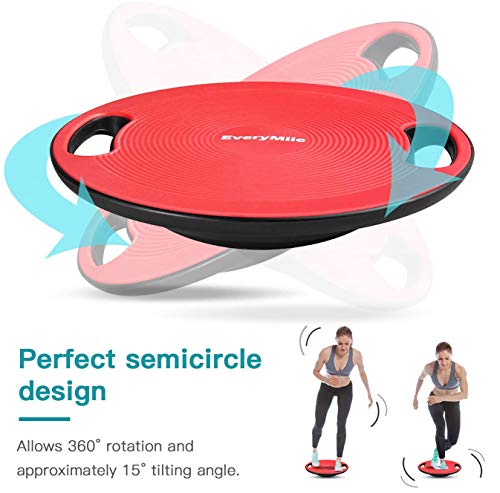
Unlike a rocker board that moves primarily in one direction, the EVERYMILE Wobble Balance Board can tilt from front to back, move from side to side, and rotate through circular patterns. This multidirectional movement makes it suitable for challenging balance, coordination, and body-position awareness.
Engages Your Core and Lower Body
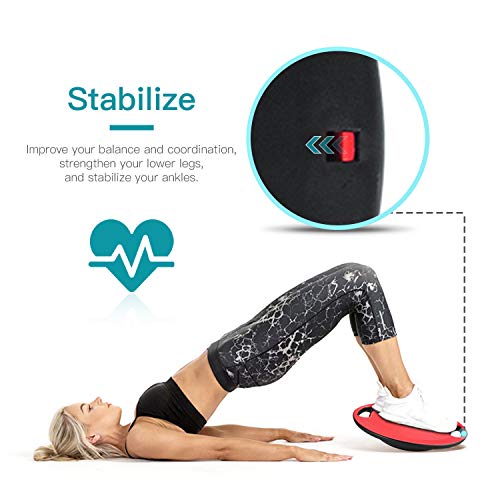
Keeping the board controlled requires ongoing adjustments from the muscles involved in stability. It can add a balance challenge to exercises that engage the core, ankles, legs, and hips, without requiring a large piece of gym equipment.
The difficulty depends on the exercise, stance, available support, and the user’s current balance ability.
More Ways to Vary a Home Workout
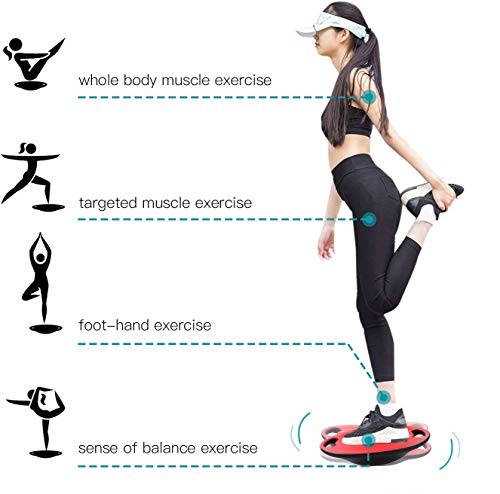
The board can be used for basic standing drills, controlled tilting, and circular movements. More experienced users may also incorporate it into squats, calf raises, planks, or supported push-ups.
Exercises should be selected according to your ability. Adding an unstable surface makes familiar movements more demanding and is not appropriate for every person or every exercise.
Textured Platform with Six Base Feet
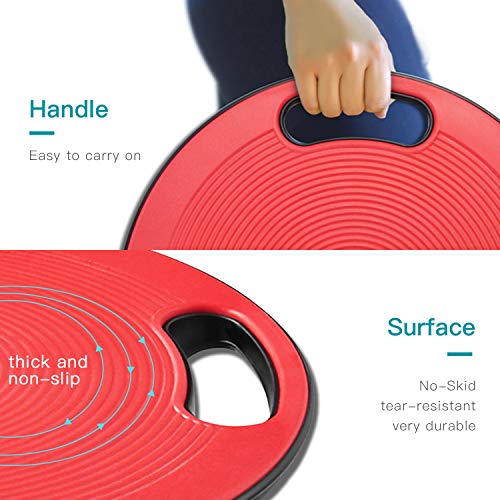
Everymile describes the top as a textured, anti-skid surface and equips the underside with six feet intended to help stabilize the board against the floor.
Before beginning an exercise, confirm that your feet and the underside of the board maintain dependable contact. Use an appropriate exercise mat if the board moves on smooth flooring.
Built-In Handle for Easier Carrying
A handle opening is integrated into the platform, making the board easier to carry between rooms or take to a gym or office. Its compact shape also requires considerably less storage space than an inflatable balance trainer.

Size, Materials, and Other Details
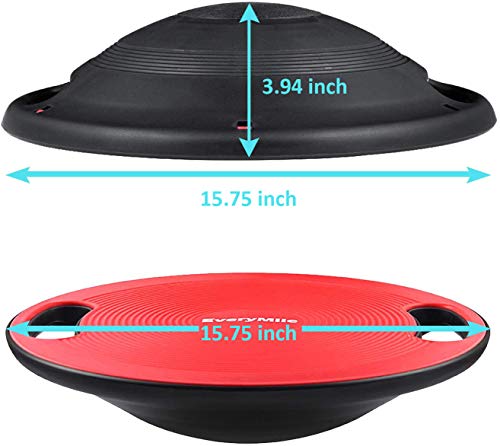
- Platform diameter: 15.7 inches
- Overall height: Approximately 3.94 inches
- Tilting angle: Up to approximately 15°
- Item weight: Approximately 3.5 pounds
- Maximum recommended capacity: Up to 300 pounds
- Platform shape: Round
- Primary construction: Durable ABS plastic with thermoplastic rubber or elastomer components
- Inflation required: No
- Assembly required: No
- Available options: Colors and styles may vary on Amazon, so check the currently selected version before ordering
Before you choose: These details reflect the linked EVERYMILE model. Check the specifications of your selected Amazon option before ordering.
Is This the Right Type of Balance Board for You?
Balance trainers do not all move or feel the same. The EVERYMILE is a compact, rigid wobble board that moves in every direction. The three cards below compare it with a rocker board and an inflatable balance trainer, helping you see which format may better suit your experience, available space, and preferred exercises.
Compare the Three Balance Trainer Types
This model
🟣 EVERYMILE Wobble Board
Movement
Multidirectional, including circular movement
Platform feel
Firm, rigid plastic
Typical learning curve
More challenging because it moves in every direction
Space required
Compact and easy to store
May suit
Compact balance, core, and lower-body drills
🟣 Rocker Board
Movement
Primarily front-to-back or side-to-side
Platform feel
Firm wood or plastic
Typical learning curve
Often easier for beginners to control
Space required
Usually compact
May suit
Learning controlled movement in one direction
🟣 Inflatable Balance Trainer
Movement
Multidirectional with a softer, springier response
Platform feel
Cushioned and flexible
Typical learning curve
Varies according to its design and inflation
Space required
Generally larger and bulkier
May suit
A larger exercise surface and wider workout variety
✅ When the EVERYMILE may fit your needs
It may suit you if you want a compact trainer with full multidirectional movement and are comfortable using a relatively narrow 15.7-inch platform.
ℹ️ When another format may fit better
Consider a rocker board for more controlled movement in one direction, or a larger trainer if you want a wider stance, softer surface, or more room for floor-based exercises.
Mayo Clinic Press also distinguishes between rocker boards, which provide more limited movement, and wobble boards that permit movement in all directions. It recommends choosing an appropriate level of instability for the user’s ability. Read the balance-board guidance.
What to Know Before Choosing This Balance Board
Is the EVERYMILE Wobble Balance Board suitable for beginners?
Beginners can use it, but a round wobble board moves in every direction and may feel challenging at first. Begin beside a sturdy counter, railing, or other stable support. Do not step onto it near sharp objects, furniture edges, or other hazards.
People with significant balance difficulties, dizziness, recent surgery, or an injury should consult an appropriate healthcare professional before using it.
Is the 15.7-inch platform large enough for both feet?
The board is designed to accommodate both feet, but its 15.7-inch diameter creates a relatively narrow stance. The 15.7-inch diameter creates a relatively narrow stance. Compare this measurement with your preferred foot position before ordering.
If you prefer wide-stance squats or want more room to reposition your feet, a larger platform may be a better choice.
Will the board stay in place on hardwood or tile?
The underside has six feet intended to improve contact with the floor, but grip can vary depending on the flooring and its condition. Smooth flooring may provide less friction than a suitable exercise mat. Test the board carefully before placing your full weight on it.
Use it only on a clean, dry, level surface. A suitable non-slip exercise mat may provide better stability on hardwood or tile. Do not continue if the board slides during use.
Which exercises can be performed with it?
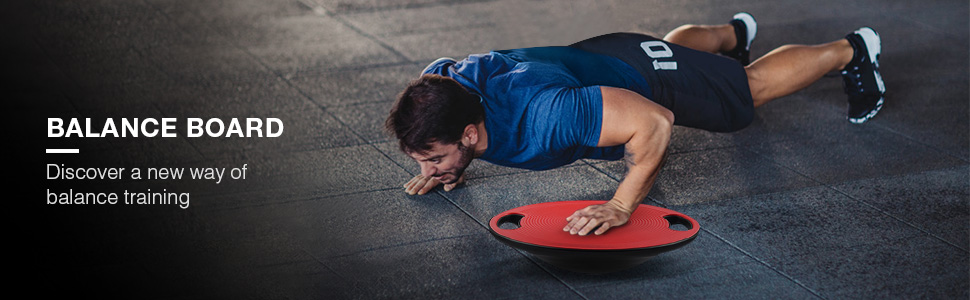
Possible uses include supported standing balance, front-to-back tilting, side-to-side movement, and controlled circles. Depending on your experience, it may also be incorporated into squats, calf raises, planks, or supported push-ups.
Because the unstable platform increases the difficulty of an exercise, begin with simple movements and maintain control rather than trying to create the greatest possible tilt.
Can it be used for ankle recovery or physical therapy?
Balance boards are sometimes included in professionally supervised rehabilitation programs, but they may not be appropriate for every injury or stage of recovery. Our guide to ankle sprain treatment and exercises to help prevent future sprains explains how balance work may fit into a gradual recovery plan.
If you are recovering from an ankle injury or surgery, ask a physical therapist or healthcare professional before using the EVERYMILE board. It should not be treated as a medical device or a substitute for professional care.